


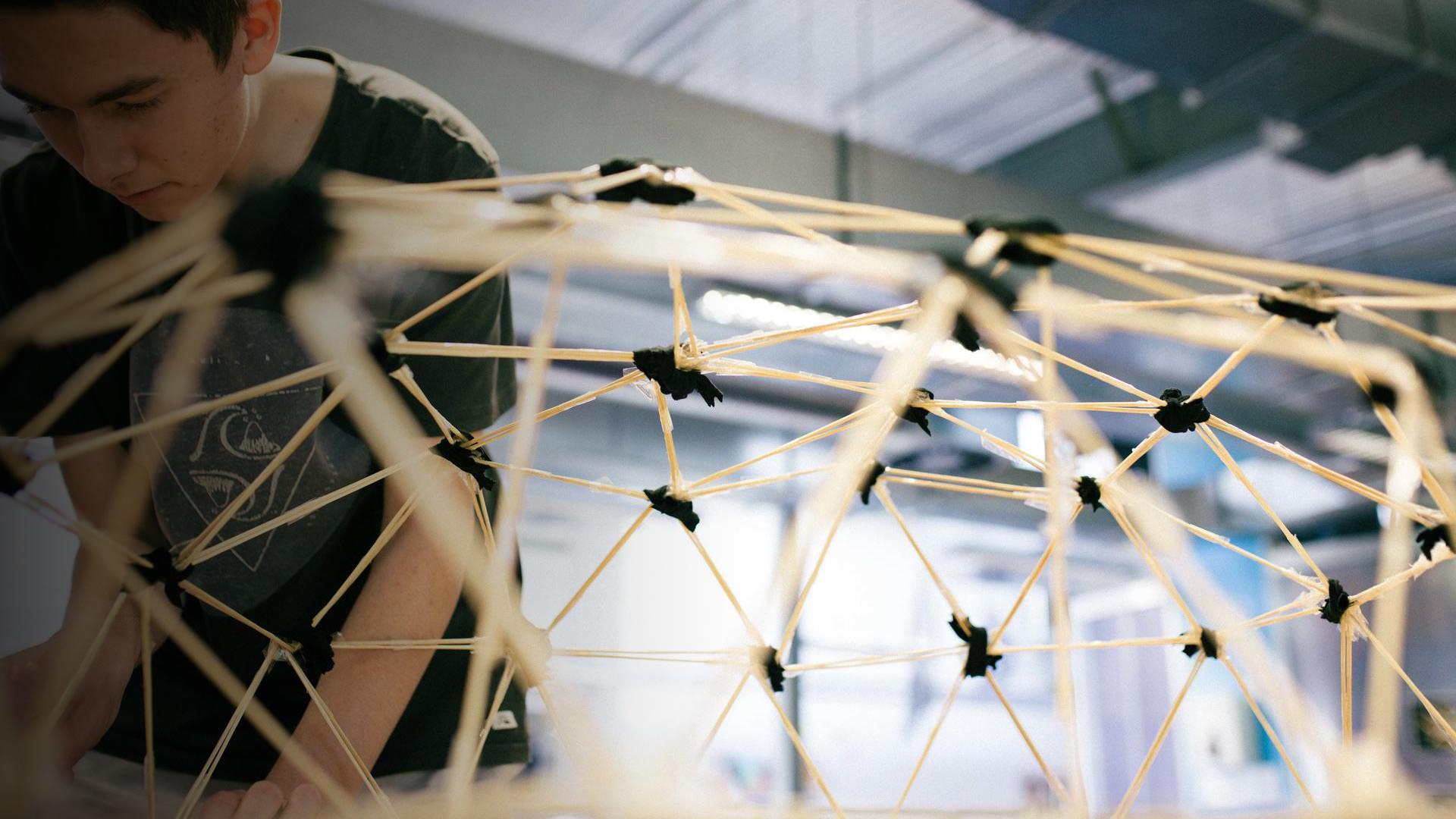

Over the past six weeks, a group of our Te Taiao ākonga have stepped beyond the classroom and into the natural world, exploring the health of our local waterways and marine environments. From stream testing to snorkelling in a marine reserve, this Impact Project has been all about hands-on learning, curiosity, and real-world connection.
Our kaiako Monique Townsend shares a glimpse into the journey so far.
Recently, ākonga in the Te Taiao Starter Impact Project Hub have swapped their desks for gumboots and snorkels. Our mission? To dive deep into the health of our local waterways and marine environments.
In partnership with the Mountains to Sea Conservation Trust (MTS), we’ve journeyed from our local streams to the pristine waters of a marine reserve, gaining the skills needed to become the next generation of environmental kaitiaki.
Our partnership with MTS kicked off on 18 February with an intensive theory session, where we learned about the delicate balance of New Zealand’s ecosystems. Since then, it’s been all about hands-on investigation:
Oteha Stream (25 February): We conducted our first stream health investigation just down the road from ASHS.
Tauhinu Sea Scouts (4 March): We explored the mudflats and mangroves, using core samples and “Marine Metre Squared” surveys to see what’s living beneath the surface.
Goat Island Marine Reserve (18 March): The grand finale! A full day of freshwater and rocky shore investigations, plus snorkelling in New Zealand’s oldest marine reserve.
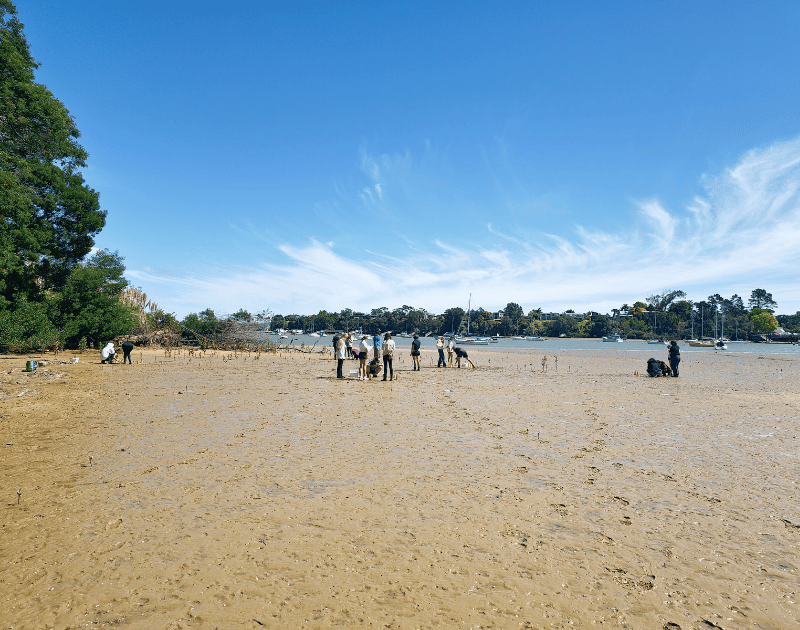
‘Mucking’ about in the Tauhinu mudflats.
Through the MTS programme, ākonga didn’t just look at the water; they analysed it. We learned how to measure pH and nutrient levels, oxygen, and temperature to determine water quality. One of the biggest highlights was identifying indicator species, whose presence tells us that a stream is healthy.
“I learnt about how important oxygen is for water health, and that the animals and creatures living in the water can show us what kind of stream health we had. Like in our freshwater investigation, there were tiny freshwater crayfish… which showed us that this was a good stream.” – Natalia Stadler
While Oteha Stream and the mudflats at Tauhinu offered plenty of “shrimp-filled” excitement, the trip to Goat Island was the undisputed favourite. For many, snorkelling was a brand-new experience. Seeing massive snapper, exploring the reef, and even getting a close look at shark jaws and pufferfish specimens brought our classroom learning to life in a way we’ll never forget.
“I enjoyed snorkelling at Goat Island the most, as I have always wanted to go, but have never had the time.” – Isabel Petersen
“Snorkelling, because I have never done that before and it was the first time I had seen underwater.” – Alice Ma
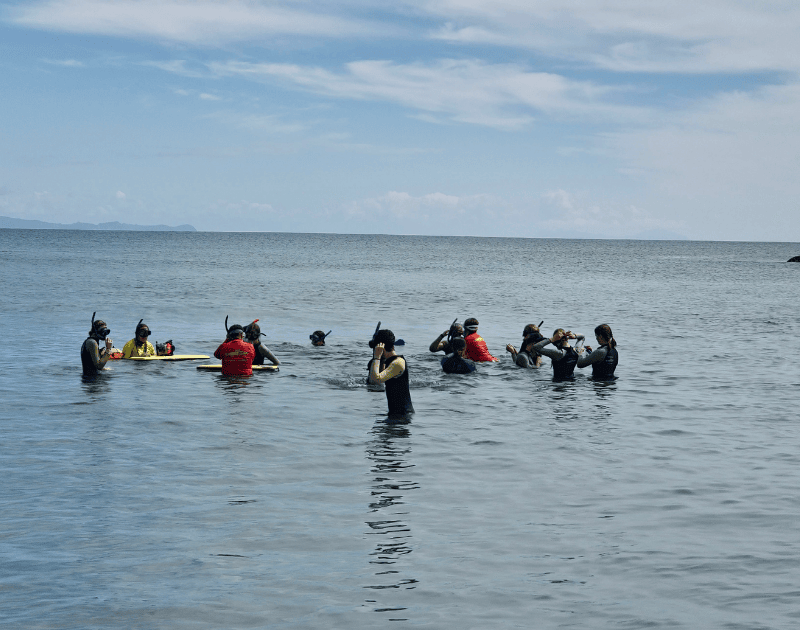
Finally! The highlight of the program – snorkeling!
What’s Next?
The theory and investigations are complete, but the work is just beginning. The Mountains to Sea team will be returning to school soon to help us transition from investigation to action. Ākonga can now use the data, skills, and knowledge they’ve collected to design and facilitate projects that improve the health of our local environment.
Stay tuned to see how our Te Taiao ākonga turn their learning into a legacy for our community.
A special thank you to the team at MTS – especially Janey Taylor and Jacob Carroll – and to the Impact Lead Team, who supported a teacher to think big and bring this project to life.
Monique Townsend
Mentor, Te Taiao Starter Impact Hub